Best Connected Papers Alternatives in 2026
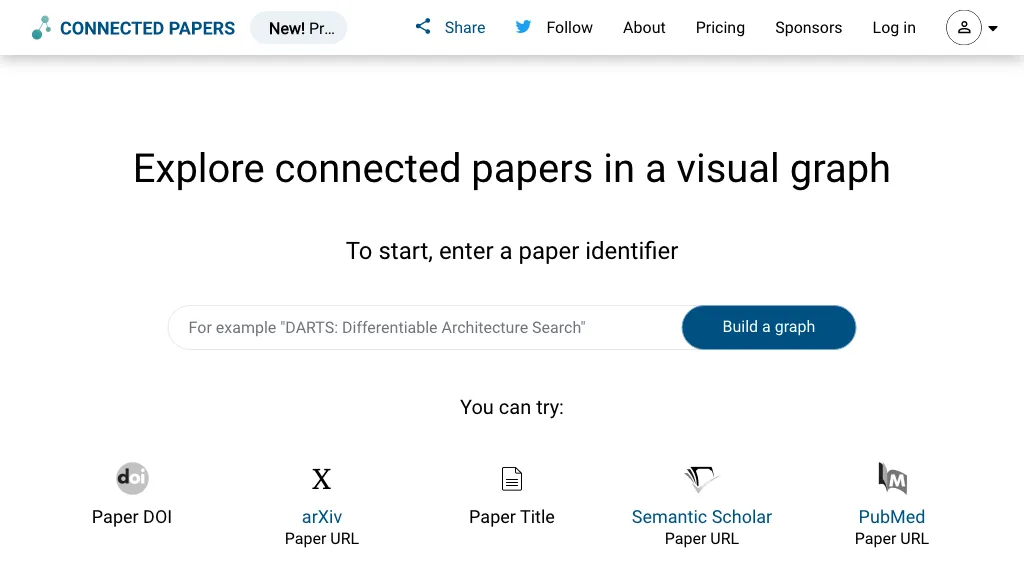
73.9% positive · 23 user reviews FreemiumConnected Papers visualizes academic literature as a graph, letting users enter a paper and instantly see related works, citation paths, and trends. It aids in building bibliographies, spotting gaps, and finding recent research.
We've ranked 17 Connected Papers alternatives, including 16 with a free plan. Rankings are based on feature coverage and user feedbacks.
Top-rated alternatives include Semanticscholar, Scisummary, and openknowledgemaps.org.
17 Connected Papers Alternatives & Competitors, Ranked by User Reviews
Click Compare on any tool to compare it side-by-side with Connected Papers.
#1
Semanticscholar
Semantic Scholar indexes 230 million papers, offering AI‑powered semantic search that prioritizes relevance and citation impact. It provides contextual PDF annotations, a developer API, and export options for literature reviews, grant research, and teaching.
#2
Scisummary
SciSummary extracts abstracts, methods, results, and conclusions from scientific papers, supports bulk summarization and comparative overviews, provides AI‑generated figure statistics, and indexes up to 1,000 documents for semantic search to aid researchers in managing literature.
#3
openknowledgemaps.org
Open Knowledge Maps is an AI search engine that visualizes scientific literature across disciplines, clustering related papers to reveal topic connections and trends. It supports varied document types, offers high‑quality metadata, multilingual browsing, and open‑source integration.
#4
WisPaper
Wispaper is an AI-driven research tool that simplifies academic literature reviews by filtering relevant studies and offering personalized alerts. Upcoming features include project organization tools and AI-generated summaries to streamline knowledge building.
#5
Qonqur
Qonqur automatically maps uploaded academic papers into interactive citation networks, visualizing current research positions and future discovery paths. It updates in real time, tracks progress, supports multiple disciplines, and highlights emerging trends through generative AI.
#6
ResearchPal
ResearchPal automates literature reviews, summarizing PDFs and extracting key insights. It offers citation management, integrates with Zotero/Mendeley, writes structured academic drafts, supports paraphrasing, translation, tone adjustment, domain‑specific search, and real‑time collaborative editing.
- Personalized recommendations
- Custom collections
- Save favorites
Already a member? Sign in
#7
OpenRead
OpenRead centralizes research by letting users upload documents, search 20,000+ journals, compare papers, generate Q&A, graphs, notes, and chat with AI models. It also offers diagram creation, image editing, and homework help, with frequent model updates.
#8
Explainpaper
Explainpaper reads research papers, offering contextual, step‑by‑step explanations in 50+ languages. Highlight text for tailored breakdowns, ask chat questions with cited sections, and extract outlines, key findings, concept maps for quick, focused literature review.
#9
Paper Digest
Paper Digest is an AI-powered research platform that facilitates literature reviews, deep research, and report generation. It features an AI reader for PDF analysis, an AI writer for content drafting, and a question-answering tool for scientific literature.
#10
Paper pilot
Paper Pilot uses AI to search 220 million papers, produce concise summaries, and provide linked citations. It lets users organize up to 50 papers on interactive boards, annotate, and receive AI‑assisted writing and real‑time research help.
#11
Seaml.es
Seamless AI Literature Review Tool automates literature reviews by retrieving relevant papers from Semantic Scholar and integrating them with user context. It also offers AI‑powered scholarship search, application support, and real‑time essay enhancement for research workflow.
#12
Papers
Papers manages research libraries by importing and auto‑matching bibliographic data, letting users tag, rate, and organize sources. AI offers article recommendations and chat queries, while inline annotations sync across Mac, Windows, and mobile. SmartCite supports 10,000+ styles and integrates impact metrics.
#13
citrus search
Citrus Search is a specialized search engine for scientific literature, enabling efficient location of research papers through text queries. It utilizes similarity-based algorithms, citation networks, and timelines to offer comprehensive coverage and improved relevance in search results.
#14
Paperguide
Paperguide is an AI research assistant that searches 200 million papers, delivers cited answers, and automates literature reviews with structured summaries, tables, and figures. It offers a full‑document writer, reference manager, OCR, citation formatting, and collaboration tools.
#15
PaperLens
PaperLens is an AI-driven research platform that enhances literature reviews by providing semantic search, summarizing papers through an AI chatbot, and offering smart filtering options for efficient access to peer-reviewed research.
#16
AssistxApp
AssistXApp is an AI research assistant that finds citations across 50+ databases (PubMed, arXiv, Google Scholar), summarizes papers with extractable highlights, automates literature-review tasks (thematic analysis, trend detection, gap identification), and exports bibliographies and files.
#17
Paperz
Paperz offers an AI‑driven autocomplete engine that generates text as you type, pulls peer‑reviewed citations, and inserts formatted references. It can expand notes, draft sections, summarize papers, and provide structural outlines, streamlining academic manuscript creation.
Frequently Asked Questions
Why look for Connected Papers alternatives?
Common reasons users switch from Connected Papers:
- User satisfaction: Connected Papers holds a 73.9% positive rating — some users report unmet expectations.
- Feature gaps: teams needing specific capabilities like Analyze Papers may find a more focused alternative better suited to their workflow.
- Flexibility: exploring alternatives helps find tools that better match your team size, integrations, and budget.
What is the best alternative to Connected Papers?
Based on 11 user reviews, Semanticscholar (72.7% positive) ranks as the top Connected Papers alternative. Semantic Scholar indexes 230 million papers, offering AI‑powered semantic search that prioritizes relevance and citation impact. It provides contextua It is available on a Free plan.
How do the top Connected Papers alternatives compare?
| Tool | Pricing | Starting Price | User Rating |
|---|---|---|---|
| Connected Papers this tool | Freemium | — | 73.9% (23) |
| Semanticscholar | Free | — | 72.7% (11) |
| Scisummary | Freemium | $6.99/mo | 50% (6) |
| openknowledgemaps.org | Freemium | — | 100% (1) |
| WisPaper | Freemium | — | — |
| Qonqur | Freemium | — | 100% (2) |
Are there free Connected Papers alternatives?
Yes, 16 free alternatives found in our list: Semanticscholar, Scisummary, openknowledgemaps.org. and 13 more — use the pricing filter above to see them all.
What should I look for in a Connected Papers alternative?
- Core capabilities: confirm the tool supports Analyze Papers, Build Graphs, Identify Derivative Works.
- Pricing transparency: look for clear free plan, trial period, or tiered pricing — avoid tools that hide costs.
- User reviews: check both the satisfaction percentage and the number of reviews; a high score from few users is less reliable.
- Integrations: verify it connects with your existing stack before committing.
- Support and updates: active development and responsive support are strong signals of a maintained product.
Which Connected Papers alternative has the highest user rating?
openknowledgemaps.org has the highest satisfaction score among Connected Papers alternatives, with 100% positive from 1 user review. It is available on a Freemium plan.
What are Connected Papers alternatives used for?
- Analyze Papers
- Build Graphs
- Identify Derivative Works
- Generate Bibliographies
- Organize Literatures