
Top Chattie Alternatives in 2026
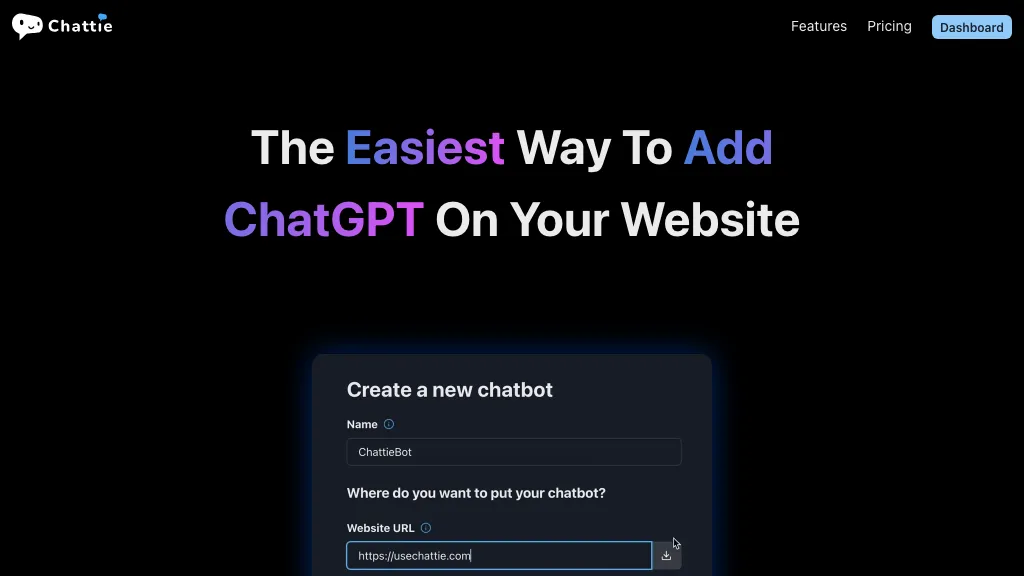
No user reviews yet SubscriptionChattie lets web owners embed ChatGPT into their sites, training bots on custom PDFs, DOCX, CSV, etc., while auto‑generating prompts. A CSS theme editor and live preview match site design, and analytics track usage.
Best 5 Chattie Alternatives:
29 Chattie Alternatives & Competitors
Tool
Pricing
Rating
Popularity
Compare

#1
Chatbit
Deploy AI chatbot customized without coding
Freemium
No reviews yet
29 popularity
▼ -77.7% MoM

Generate effective prompts for ChatGPT
Free
100%
4 reviews
52 popularity

#3
BotGPT
AI-powered chatbot answers queries, boosts conversions on websites
Freemium
from $2.99/mo
No reviews yet
▼ -100.0% MoM

#4
YourGPT
Deploy AI agents for customer support and sales automation.
Subscription
50%
2 reviews
54 popularity
▼ -44.5% MoM

#5
CustomGPT.AI
Build AI agents from existing documents, no coding.
Subscription
100%
5 reviews
52 popularity
▲ +9.2% MoM

#6
ChatGPT
AI assistant chatbot that delivers accurate answers, generates high-quality content, and automates various tasks
Freemium
from $20/mo
85.7%
35 reviews
100 popularity
▲ +1.3% MoM
App

Deploy AI chatbots on websites without coding, using GPT models
Freemium
from $18/mo
100%
1 review
44 popularity
▼ -17.3% MoM

#8
MagicChat
Build, deploy, and manage AI-driven custom chatbots
Freemium
No reviews yet
38 popularity
▲ +122.6% MoM


Create GPT-powered chatbot from diverse data, embed on sites
Subscription
from $9/mo
100%
1 review
32 popularity
▲ +49.6% MoM

#11
Automatic Chat
AI chatbot for instant, branded website customer support
Freemium
from $14/mo
50%
1 review
34 popularity
▲ +140.1% MoM

#12
GPT-trainer
Build AI-driven agents for multichannel voice and text support
Paid
from $8.49/mo
No reviews yet
44 popularity

#13
ChatGPT Images
Creative image generation and editing within ChatGPT interface.
Freemium
72.7%
22 reviews
72 popularity

Build custom chatbots from website or business data in minutes
Freemium
from $49.99/mo
88.9%
9 reviews
50 popularity

Create AI chatbot using your data and embed on website.
Free trial
50%
4 reviews
30 popularity
▼ -9.6% MoM

Build AI chatbots across channels with integration and analytics.
Subscription
from $49/mo
No reviews yet
33 popularity

Build branded AI chatbots without coding for websites and apps
Subscription
from $9/mo
No reviews yet

#18
GPTAgent
Build AI web apps and bots visually, no coding required.
Free
No reviews yet
44 popularity

#19
Coconaut
AI-powered chatbot building from PDFs and URLs
Subscription
from $19/mo
60%
5 reviews
29 popularity
▼ -34.0% MoM


#21
GPT-Prompter
Instant AI text generation and on-page explanation via GPT integration
Free
100%
1 review
36 popularity
▲ +553.0% MoM

#22
SupportAI
Personalized real-time customer assistance and engagement
Free trial
from $29/mo
No reviews yet
40 popularity

Create GPT assistants quickly with AI templates and Zapier integration
Freemium
from $15/mo
75%
4 reviews

#24
AIDev.Codes
Build interactive web pages and chatbots
Free
No reviews yet
33 popularity
▲ +94.0% MoM

#25
Chatbuild ai
AI-driven custom chatbot creation, zero coding required.
Subscription
from $39.99/mo
No reviews yet
29 popularity
▼ -40.9% MoM

#26
PowerBrain
Provides fast answers and automates tasks.
Freemium
62.5%
8 reviews
35 popularity
App

#27
Chatgot
AI chatbot for drafting, coding, summarization, image generation, PDF analysis
Freemium
from $9.9/mo
50%
2 reviews
53 popularity
▲ +9.6% MoM

#28
Quickchat AI
Build chatbots with GPT-3, no coding needed.
Freemium
from $99
No reviews yet
50 popularity

#29
FlowGPT
Find and deploy AI prompts for ChatGPT tasks
Free trial
61.5%
13 reviews
64 popularity
▼ -20.4% MoM
Also listed in:
Knowledge base management
Prompt Guides
Chat
Chatbot builder
Leading AI Assistants
Customer support
Frequently Asked Questions
Based on user reviews, the highest-rated Chattie alternatives are
CustomGPT.AI (100%),
Wonderchat (88.9%),
ChatGPT (85.7%),
ChatGPT Images (72.7%),
PowerBrain (62.5%).
Yes, 21 of the 29 alternatives listed here offer a free plan, including Chatbit, ChatGPT Prompt Generator, BotGPT.
GPT-Prompter is the fastest-growing Chattie alternative here, with traffic up 553% month over month.