
What is Otari AI?
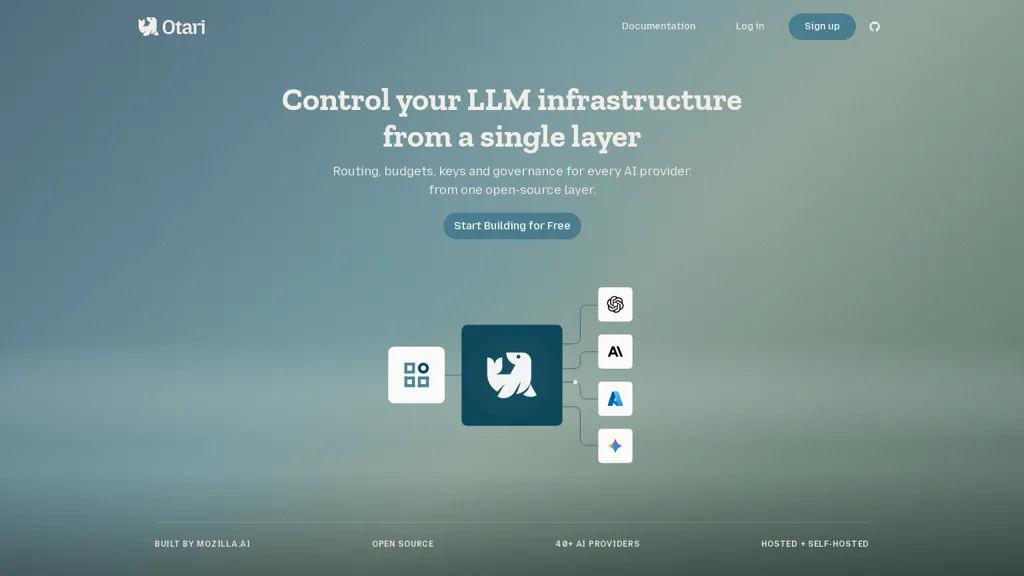
Otari is an open-source AI gateway and hosted control plane that unifies access to 40+ LLM providers including OpenAI, Anthropic, Azure, and Google Gemini.Provides a single-endpoint LLM routing layer with per-workspace routing rules, model-level selection, and automatic failover for provider outages.
Enforces budgets and hard token limits across projects, centralizes API key management, and maintains audit trails for governance and access control.Supports hosted and self-hosted deployments with OpenAI-compatible client interfaces and SDKs for Python, TypeScript, Rust, Go, and curl.
Includes agent harnesses and orchestration tools to prepare models for production workflows and consolidates usage, analytics, and routing configuration in one dashboard.Designed for developers, platform engineers, and security teams needing multi-provider LLM routing, cost control, key governance, and operational reliability.
Otari AI pricing
FreeThis tool is free to use, with no credit card required.
Verify on the official pricing page.
Get started freeOtari AI's key features
-
Single-endpoint AI gateway/control plane unifying access to multiple LLM providers
-
Per-workspace routing with model-level selection and automatic failover
-
Budget enforcement and hard token limits across projects
-
Centralized API key management and audit trails for governance and access control
-
Hosted and self-hosted deployments with OpenAI-compatible client interfaces and SDKs (Python, TypeScript, Rust, Go, curl)
Otari AI use cases
-
Unify access to multiple LLM providers for your application using Otari's single endpoint, set per-workspace routing and automatic provider failover to ensure high availability while enforcing budget and token limits to control costs
-
Build a compliant, auditable LLM-powered customer support platform by centralizing API key management and audit trails in Otari, monitor usage with the analytics dashboard and enforce per-team budgets and token quotas for governance
-
Integrate Otari's SDKs into your development workflow to rapidly switch LLM providers and implement automatic failover, route requests per workspace and leverage usage analytics to optimize model selection and spending
Otari AI user reviews
Would you recommend Otari AI?
Who is Otari AI for?
-
Developers
-
Platform engineers
-
Product managers
-
Security teams
-
System administrators
Otari AI FAQ
Is Otari AI free?
Yes. Otari AI is free to use and does not require a credit card.
What are the best alternatives to Otari AI?
The closest alternatives to Otari AI are LLMAPI.ai, FreeLLMAPI, OmniRoute, Opper.ai and portkey.ai. You can compare them side by side in the alternatives section further down this page.
Does Otari AI have an API?
Yes. Otari AI offers an API, so you can call it from your own applications instead of using the interface directly.


