
What is Chattts?
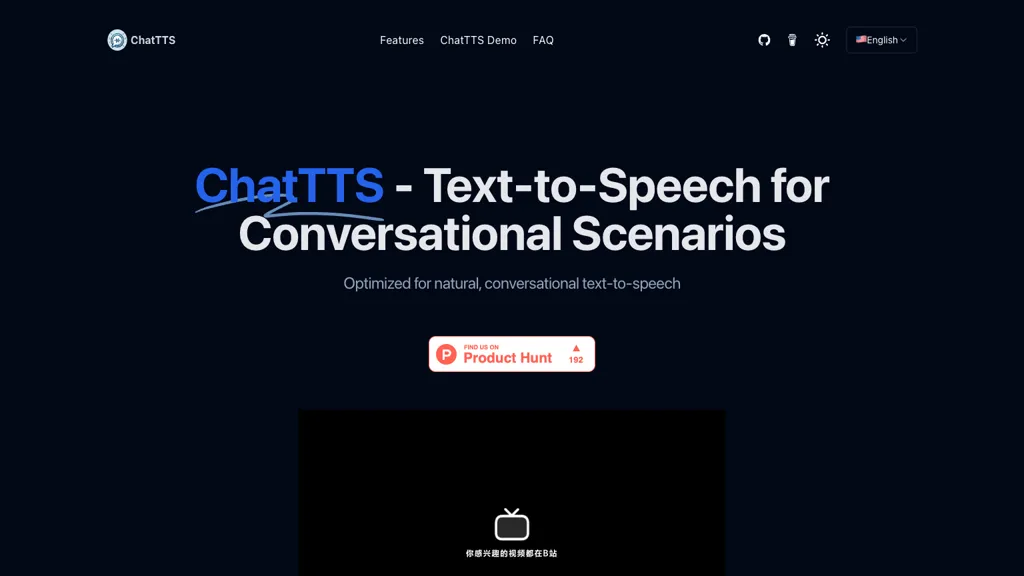
ChatTTS is a text‑to‑speech model optimized for conversational scenarios, supporting both English and Chinese.
It is trained on roughly 100,000 hours of spoken language data, yielding natural‑sounding voice output for dialogue and LLM‑assistant applications.
The model is compatible with web, mobile, desktop, and embedded platforms, and can be integrated via provided APIs or SDKs.
Users input plain text and receive audio files, facilitating quick deployment in chatbots, video intros, educational modules, and other speech‑synthesis workflows.
The project offers an open‑source base model (40,000 hours of training data) to encourage academic research and developer customization.
Control measures such as watermarking and security integration are planned to ensure reliable and safe operation.
ChatTTS includes straightforward installation instructions, clone the repository, install `torch` and the `ChatTTS` package, and call `chat.infer()` to generate speech.
The tool’s design emphasizes ease of use, high‑quality synthesis, and versatility across multiple languages and application contexts.
Chattts pricing
SubscriptionPricing details aren't listed here — check the official pricing page below.
Verify on the official pricing page.
View plansChattts's key features
-
Multi-language support: English, Chinese
-
Extensive data training: 100k+ hours
-
Dialog task compatibility
-
Open-source base model
-
Simple text-to-speech input
-
API and SDK integration
-
Cross-platform compatibility (web, mobile, desktop)
Chattts use cases
-
Real‑time spoken responses for multilingual customer support chatbots, allowing agents to auto‑generate English or Chinese voice replies via the ChatTTS API
-
Seamless voice‑enabled language‑learning app that presents dialogues in natural English and Chinese, using ChatTTS to pronounce words and phrases for immersive practice
-
Embedded in e‑book readers or document editors to provide natural‑sounding narration of text in multiple languages, enhancing accessibility for visually impaired users
Chattts user reviews
Based on 1 review, 100% of users recommend Chattts, rated highly for quality results.
Liked for
Would you recommend Chattts?
Who is Chattts for?
-
Voice actors
-
Content creators
-
Audio engineers
-
Language learners
-
Speech synthesizers
Chattts FAQ
Is Chattts free?
No. Chattts is a paid product and requires a paid plan to use.
What are the best alternatives to Chattts?
The closest alternatives to Chattts are Free Text-To-Speech, SpeechGen, TTSMaker, Voice Design AI and lovevoice AI. You can compare them side by side in the alternatives section further down this page.
Does Chattts have an API?
Yes. Chattts offers an API, so you can call it from your own applications instead of using the interface directly.


