
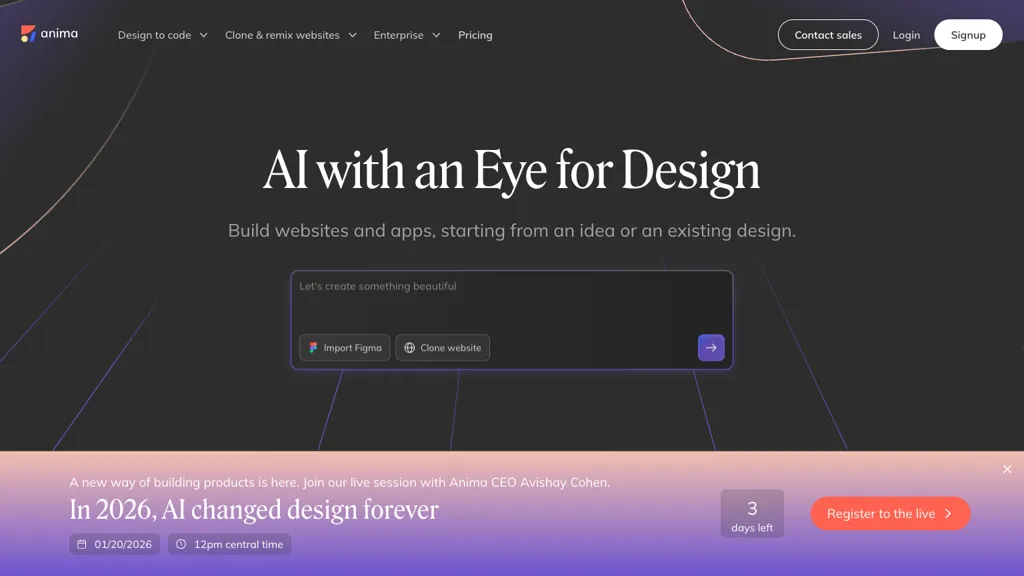
What is Anima?
Anima is a design-to-code tool that integrates seamlessly with Figma, enabling users to transform their design assets into functional, test-ready applications. This platform allows designers and developers to import Figma designs and convert them into responsive websites or web apps, facilitating a smoother workflow in the design development process.
With features such as real-time iteration, users can tweak designs, add functionalities, and connect backend services effortlessly. Anima also supports live sharing of projects through generated links, making it simple to collaborate with teams and stakeholders.
Anima pricing
Free trialVerify on the official pricing page.
Start free trialAnima's key features
-
Figma integration
-
Transformation of design assets into functional applications
-
Real-time iteration
-
Live sharing of projects
-
Support for backend services connection
Anima use cases
-
Transform your Figma design assets directly into responsive applications with Anima, ensuring a seamless transition from concept to code without manual coding efforts.
-
Utilize Anima's real-time iteration features to make adjustments on-the-fly, allowing for efficient collaboration and immediate feedback from team members and stakeholders.
-
Streamline the design-to-development workflow by leveraging Anima's live sharing capabilities, enabling easy project reviews and collaborative adjustments in real-time.
Anima user reviews
Would you recommend Anima?
Who is Anima for?
-
Web designers
-
Software developers
-
Product managers
-
Backend engineers
-
Digital marketers
Anima FAQ
Is Anima free?
Not permanently. Anima gives you a free trial, after which a paid plan is required. Plans include Enterprise at $500/mo (paid annually).
What are the best alternatives to Anima?
The closest alternatives to Anima are Codia ai, Text to Design, UX Magic, DesignCode UI and Uizard. You can compare them side by side in the alternatives section further down this page.
Does Anima have an API?
Yes. Anima offers an API, so you can call it from your own applications instead of using the interface directly.


